Have you ever paused while writing and wondered whether to use “seamless” or “seemless”? You’re not alone. This is one of those small but surprisingly common spelling confusions that can quietly affect your writing quality.
You’re crafting a blog, email, or professional document, using the correct word matters more than you think.
In this guide, we’ll break down everything you need to know about Seamless vs Seemless in a simple, engaging, and practical way. By the end, you’ll never second-guess yourself again. 🚀
⚡ Quick Answer: Seamless vs Seemless
- ✅ Seamless = Correct spelling
- ❌ Seemless = Incorrect spelling
“Seamless” means smooth, continuous, or without gaps.
“Seemless” is simply a spelling mistake and should be avoided.
📘 Meaning and Definition of Seamless
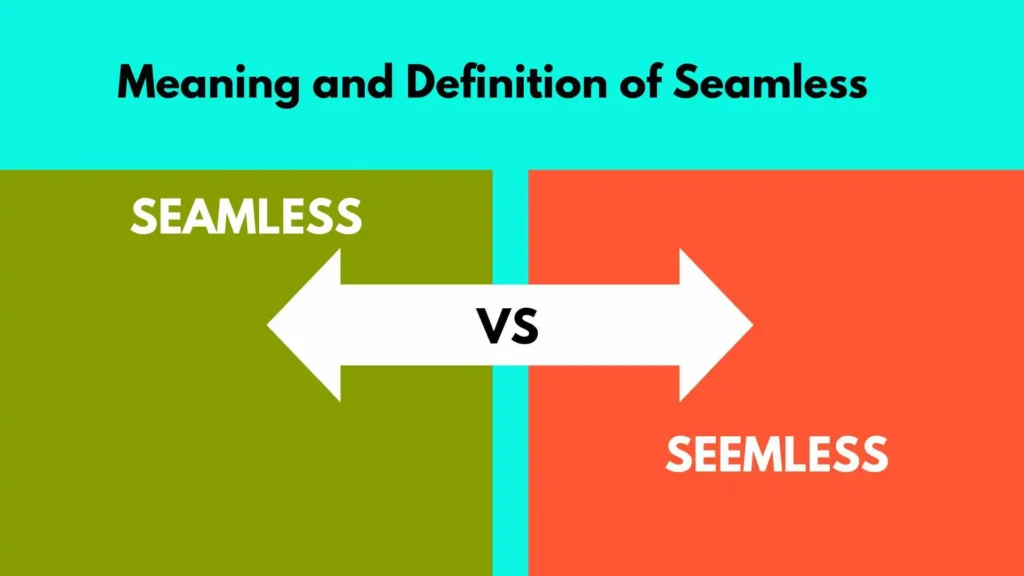
What Does “Seamless” Mean?
The word seamless comes from the word “seam,” which refers to a line where two pieces are joined together (like in clothing).
👉 Seamless = Without seams or interruptions
Common Meanings:
- Smooth and continuous
- Without gaps or breaks
- Effortless and flowing
Examples:
- The app provides a seamless experience for users.
- Their teamwork was seamless and efficient.
- The transition between scenes felt completely seamless.
❌ What About “Seemless”?
Let’s clear this up quickly.
👉 “Seemless” is NOT a real word.
It’s a common spelling mistake caused by confusion with the word “seem.”
Why It Feels Right (But Isn’t)
- “Seem” is a real word (meaning to appear)
- People mistakenly think “seemless” means “without seeming”
- But English doesn’t form the word that way
So, always remember:
👉 If you mean smooth or without gaps → use seamless
Seamless Meaning
The word seamless means something that happens smoothly without any interruptions, problems, or noticeable gaps. It is often used to describe processes, experiences, technology, or transitions that feel natural and effortless.
For example, a seamless user experience allows people to move through a website without confusion. The term can also refer to physical items made without visible seams.
Seamless Synonyms
Several words can be used as synonyms for seamless, depending on the context. Common alternatives include smooth, flawless, uninterrupted, effortless, integrated, continuous, and streamlined.
These words describe situations where there are no noticeable problems or breaks. Choosing the right synonym depends on the sentence and the specific meaning you want to convey.
🤔 Why Does the Confusion Happen?
This confusion is very common, and here’s why:
1. Similar Pronunciation
Both words sound nearly identical when spoken.
2. Familiar Word “Seem”
People recognize “seem” and assume “seemless” must be correct.
3. Fast Typing Errors
Typing quickly often leads to swapping letters accidentally.
4. Lack of Awareness
Many writers simply haven’t learned the correct spelling yet.
Seamless vs Seemless Examples
Several words can be used as synonyms for seamless, depending on the context. Common alternatives include smooth, flawless, uninterrupted, effortless, integrated, continuous, and streamlined.
Example
✅ Correct: The company created a seamless online shopping experience for its customers.
❌ Incorrect: The company created a seemless online shopping experience for its customers.
Example
✅ Correct: The app update provided a seamless transition between devices.
❌ Incorrect: The app update provided a seemless transition between devices.
📏 Grammar Rules You Should Know
To avoid mistakes, understand this simple rule:
✔️ Rule:
Words related to joining or smoothness often come from “seam”, not “seem.”
Examples:
- Seam → Seamless
- Seam → Seamstress
- Seam → Seaming
❗ Important:
- “Seem” is a verb (e.g., It seems fine)
- “Seam” is a noun (related to stitching or joining)
🧠 Easy Memory Tricks (Never Forget Again!)
Here are some simple tricks to lock this in your memory:
🔹 Trick 1: Think of Clothing
A seam is where fabric joins.
👉 No seams = seamless
🔹 Trick 2: “A” for “Accurate”
Seamless has an “A” → the Accurate spelling
🔹 Trick 3: Visual Reminder
Imagine a shirt with no stitching lines → that’s seamless
📊 Seamless vs Seemless (Side-by-Side Comparison)
| Feature | Seamless ✅ | Seemless ❌ |
| Correct Spelling | Yes | No |
| Meaning | Smooth, continuous | No meaning |
| Usage | Formal & informal | Incorrect everywhere |
| Origin | From “seam” | Misspelling of seamless |
| Example | Seamless design | ❌ Not used |
✍️ Real-Life Examples of “Seamless”
💻 Technology
- The software update ensures a seamless transition.
🏢 Business
- We aim to provide a seamless customer experience.
🎬 Entertainment
- The editing made the movie feel seamless.
🎓 Education
- The learning process should be seamless and engaging.
🛒 Daily Life
- Online shopping is now more seamless than ever.
🌍 British vs American English
Good news! There’s no difference here.
🇬🇧 British English:
- Seamless ✔️
🇺🇸 American English:
- Seamless ✔️
👉 Both versions use the same spelling and meaning.
⚠️ Common Mistakes to Avoid
Here are mistakes people often make:
❌ Incorrect:
- This app gives a seemless experience
- The process was seemless and smooth
✅ Correct:
- This app gives a seamless experience
- The process was seamless and smooth
💡 Pro Tips to Use “Seamless” Correctly
Want to sound more professional and confident? Follow these tips:
✔️ 1. Always Double-Check Spelling
Especially in emails and formal writing.
✔️ 2. Use Grammar Tools
Tools like spell check can catch “seemless.”
✔️ 3. Practice Common Phrases
- Seamless integration
- Seamless experience
- Seamless transition
✔️ 4. Read More
Seeing correct usage helps reinforce memory.
✔️ 5. Think of “Seam”
Always connect it back to stitching → no seam = seamless
📌 Advanced Usage and Context
In Marketing:
“Seamless” is often used to describe smooth user experiences.
Example:
- Our platform offers a seamless checkout process.
In UX/UI Design:
Designers aim for seamless navigation.
In Writing:
It describes flow and readability.
Example:
- The story moves in a seamless narrative.
❓ Frequently Asked Questions (FAQs)
1. Is “seemless” ever correct?
No, “seemless” is always incorrect.
2. What does “seamless” mean?
It means smooth, continuous, and without gaps.
3. Why do people write “seemless”?
Because it sounds like “seamless” and relates to the word “seem.”
4. Is “seamless” formal or informal?
It works in both formal and informal writing.
5. Are there any alternatives to “seamless”?
Yes: smooth, effortless, continuous, flawless.
6. Does British English use “seemless”?
No, both British and American English use “seamless.”
7. How can I remember the correct spelling?
Think: Seam = stitching → No seam = seamless
🧾 Conclusion: Seamless vs Seemless
Let’s wrap it up clearly.
- Seamless is the only correct spelling ✅
- Seemless is a common mistake ❌
- The word means smooth, continuous, and without interruption
By understanding its origin and using simple memory tricks, you can easily avoid this error in your writing.
👉 Next time you write, ask yourself:
“Am I talking about something smooth and connected?”
If yes, go with seamless confidently.
Read More Articles
Gnaw or Knaw: Which One Is Correct? (Complete Guide 2026)
Relieving vs Reliving: Clear Explanation with Examples
Time Flies or Time Flys – Which One Is Correct?
Nevermind vs Never Mind: What’s the Real Difference?