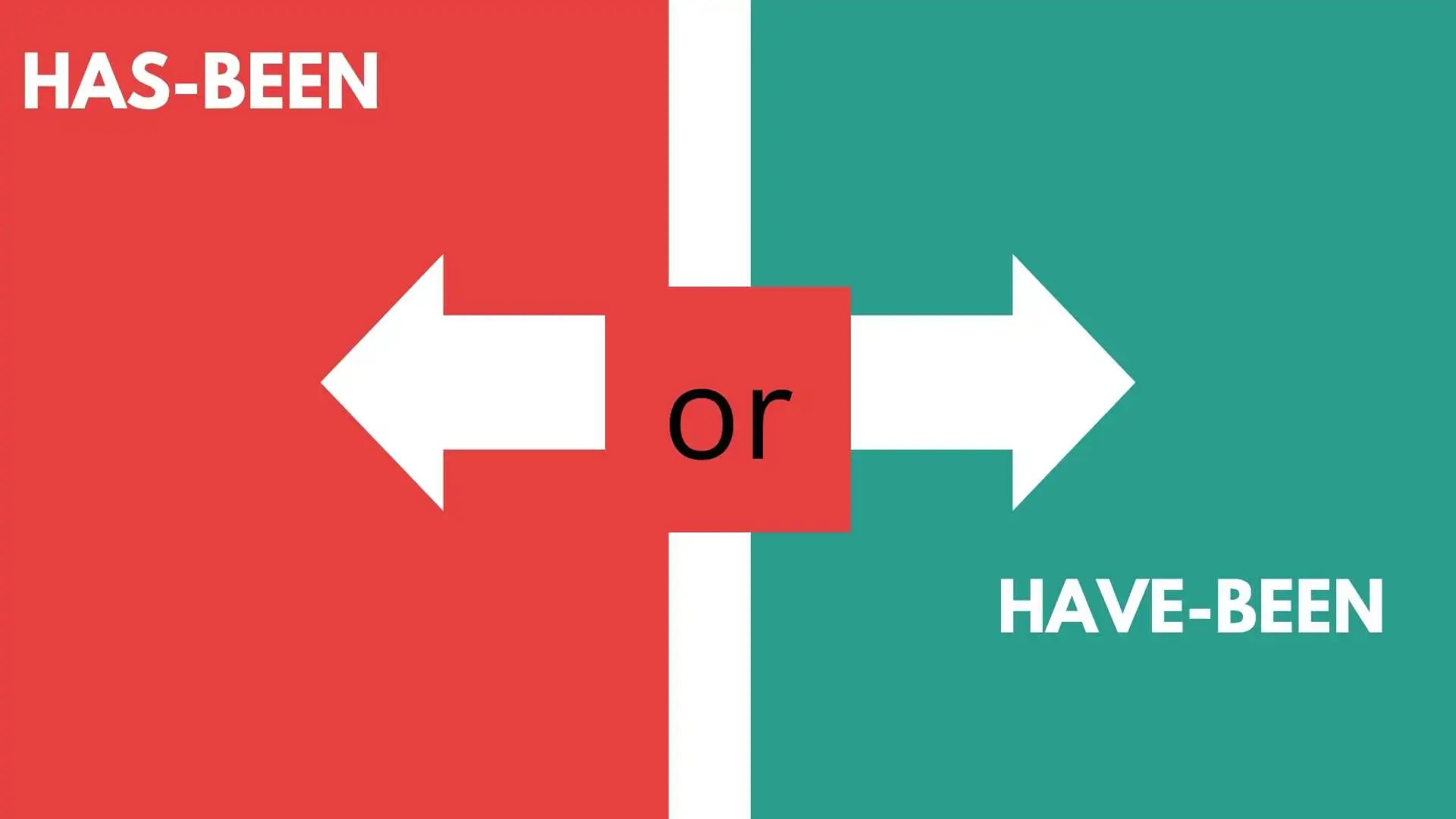
If you’ve ever paused while writing and wondered whether to use “has been or have been”, you are not alone.
This is one of the most common grammar confusions in English, especially when dealing with the present perfect tense.In this detailed guide, we will break everything down in a simple, practical, and easy-to-understand way so you never get confused again.
You are a student, content writer, or English learner, this article will help you master Has Been or Have Been with confidence.
⚡ Quick Answer: Has Been or Have Been?
Here is the simplest way to understand it:
- “Has been” → Used with singular subjects (he, she, it, singular names)
- “Have been” → Used with plural subjects (we, they, you, plural nouns)
✔ Correct Examples:
- She has been working all day.
- They have been playing football.
- I have been waiting for you.
❌ Incorrect Examples:
- She have been working all day. (Wrong)
- They has been playing football. (Wrong)
👉 Simple rule:
Singular = has been
Plural = have been
📘 Introduction to Has Been or Have Been
Understanding Has Been or Have Been is essential for mastering English grammar, especially the present perfect continuous tense.
These phrases are used to describe actions that started in the past and are still continuing or have recently stopped. Many learners struggle because both phrases look similar but follow different subject-verb rules.
For example:
- She has been studying since morning.
- We have been waiting for hours.
Even though both sentences describe ongoing actions, the verb changes depending on the subject.
In this guide, you’ll learn everything step-by-step in a very simple way so you can confidently use Has Been or Have Been in writing and speaking.
🧠 Meaning and Definition of Has Been or Have Been
Let’s break it down clearly.
✔ “Has Been”
“Has been” is the present perfect form of “be” used with:
- He
- She
- It
- Singular nouns (e.g., John, the dog, the company)
✔ “Have Been”
“Have been” is used with:
- I
- You
- We
- They
- Plural nouns (e.g., students, people, cars)
💡 What do they mean?
Both mean:
- Something started in the past
- It is still continuing OR recently finished
- It may have relevance to the present
Example:
- The company has been growing rapidly. (still growing)
- They have been traveling for a week. (ongoing action)
❓ Why Confusion Happens Between Has Been or Have Been
Many learners get confused because:
1. Similar structure
Both use “been,” so they look almost identical.
2. Focus on tense, not subject
People often focus on time instead of the subject.
3. Spoken English shortcuts
In fast speech, differences are not clearly noticed.
4. Lack of grammar rules practice
Without practice, subject-verb agreement becomes confusing.
👉 But once you understand the subject rule, everything becomes simple.
📚 Grammar Rules for Has Been or Have Been
Here are the core grammar rules you must remember:
✔ Rule 1: Subject decides the verb
- Singular subject → has been
- Plural subject → have been
✔ Rule 2: Used in Present Perfect Continuous Tense
Structure:
Subject + has/have been + verb(-ing) + object
Examples:
- She has been working here since 2020.
- We have been learning English for months.
✔ Rule 3: Time expressions often used
- since
- for
- recently
- lately
- all day
🧾 Side-by-Side Comparison Table
| Feature | Has Been | Have Been |
| Subject | Singular | Plural |
| Example | He has been tired | They have been tired |
| Tense | Present Perfect Continuous | Present Perfect Continuous |
| Usage | One person/thing | More than one person/thing |
| Auxiliary verb | has | have |
🧠 Memory Tricks to Remember Has Been or Have Been
Here are easy tricks to never forget:
She-It Rule”
If the subject is:
- He
- She
- It
👉 Use has been
🎯 Trick 2: “I-We-You-They Rule”
If the subject is:
- I, We, You, They
👉 Use have been
🎯 Trick 3: Clap Method
Say aloud:
- “He has been” (clap once)
- “They have been” (clap twice)
This helps your brain memorize patterns faster.
📝 Real-Life Examples of Has Been or Have Been
✔ Daily Life Examples:
- I have been busy all day.
- She has been cooking since morning.
✔ Work Context:
- The team has been working on the project.
- We have been improving our website SEO.
Travel Context:
- They have been traveling across Europe.
- He has been living in Dubai for 5 years.
✔ Emotional Context:
- She has been feeling sad lately.
- We have been missing you.
🌍 British vs American English: Has Been or Have Been
Good news: There is no major difference between British and American English in using Has Been or Have Been.
However, slight usage preferences exist:
🇬🇧 British English:
- Often uses present perfect more frequently
- Example:
- He has been ill for two days.
🇺🇸 American English:
- Sometimes prefers simple past in casual speech
- Example:
- He was sick for two days.
👉 But when using Has Been or Have Been, both dialects follow the same rule:
- Subject agreement remains identical.
❌ Common Mistakes with Has Been or Have Been
❌ Incorrect vs ✔ Correct Usage
- ❌ She have been working hard
✔ She has been working hard - ❌ They has been playing outside
✔ They have been playing outside - ❌ I has been waiting here
✔ I have been waiting here - ❌ The boys has been noisy
✔ The boys have been noisy
⚠️ Why These Mistakes Happen
- Forgetting subject-verb agreement
- Translating directly from native language
- Lack of grammar practice
- Confusion in long sentences
💡 Pro Tips to Use Has Been or Have Been Correctly
✔ Tip 1: Identify the subject first
Always find the subject before choosing the verb.
✔ Tip 2: Think in simple sentences
Break long sentences into smaller parts.
✔ Tip 3: Practice daily
Write 5 sentences daily using both forms.
✔ Tip 4: Read English content
Books and articles improve natural understanding.
✔ Tip 5: Speak out loud
Speaking helps reinforce grammar patterns.
🔍 Advanced Understanding: When to Use Has Been or Have Been
✔ Use “has been” when:
- Talking about one person or thing
- Describing ongoing action of singular subject
Example:
- The machine has been running all day.
✔ Use “have been” when:
- Talking about multiple people or things
- Using “I, we, you, they”
Example:
- We have been studying grammar.
🧪 Practice Section (Try Yourself)
Fill in the blanks:
- She ___ been reading a book.
- They ___ been playing cricket.
- I ___ been waiting for you.
- It ___ been raining since morning.
(Answers: has, have, have, has)
❓ FAQ: Has Been or Have Been
1. What is the difference between has been and have been?
Has been is used with singular subjects, while have been is used with plural subjects.
2. Can I use “has been” with I?
No, use “I have been,” not “I has been.”
3. Is “have been” present or past tense?
It is part of the present perfect continuous tense.
4. Can both be used for past actions?
Yes, but they connect past actions to the present.
5. Which is correct: she have been or she has been?
“She has been” is correct.
6. Is “they has been” correct?
No, the correct form is “they have been.”
7. What is the easiest way to remember has been or have been?
Remember: He/She/It = has been, I/We/You/They = have been.
🎯 Conclusion: Mastering Has Been or Have Been
Understanding Has Been or Have Been is all about mastering subject-verb agreement and recognizing when to use singular or plural subjects. Once you learn the basic rule, this grammar concept becomes extremely easy.
To summarize:
- Use has been with singular subjects
- Use have been with plural subjects
- Both are used in present perfect continuous tense