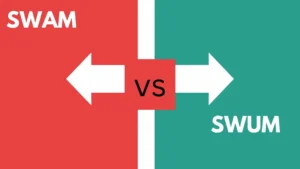
Understanding Swam or Swum is one of the most common English grammar confusions learners face. Even native speakers sometimes hesitate when choosing between these two forms. Are they both correct? If yes, when should you use each one?
The confusion usually happens because both words come from the same verb “swim,” but they are used in different grammatical situations.
In this detailed guide on Swam or Swum, you will learn the correct usage, simple rules, real-life examples, memory tricks, and common mistakes to avoid.
⚡ Quick Answer: Swam or Swum (Simple Explanation)
Here is the fast and correct answer to your question:
- ✅ Swam = Simple past tense (used without helping verb)
- ✅ Swum = Past participle (used with has/have/had)
✔ Correct Usage:
- I swam in the river yesterday.
- I have swum in that river before.
❌ Incorrect Usage:
- I have swam in the river. (Wrong)
- I swum yesterday. (Wrong)
👉 Quick rule:
If there is no helping verb → use swam
If there is has/have/had → use swum
📘 Meaning and Definition of Swam or Swum
To understand Swam or Swum, you must first know the base verb:
👉 Swim = to move through water using arms and legs
Now its forms:
| Form | Word |
| Base form | swim |
| Past tense | swam |
| Past participle | swum |
📌 Simple Explanation:
- Swam → action happened in the past
- Swum → action completed with a connection to another time (perfect tense)
❓ Why Do People Get Confused Between Swam or Swum?
The confusion between Swam or Swum happens for several reasons:
1. Irregular Verb Pattern
“Swim” is an irregular verb, so it does not follow the normal “-ed” rule.
2. Similar Sound
“Swam” and “swum” sound similar, especially in fast speech.
3. Lack of Grammar Practice
Many learners don’t clearly learn the difference between:
- past simple
- past participle
4. Overgeneralization
People wrongly assume:
If “run → ran → run”, then “swim → swam → swum” must behave similarly in all cases.
But grammar rules differ in usage.
📚 Grammar Rules for Swam or Swum
Let’s break it down clearly so you never forget again.
🟢 Rule 1: Use “Swam” for Simple Past Tense
Use swam when:
- The action is completed in the past
- No helping verb is used
Examples:
- I swam across the lake.
- She swam very fast yesterday.
- They swam in the pool last summer.
👉 Think: “Finished action in the past”
🟢 Rule 2: Use “Swum” with Helping Verbs
Use swum when:
- There is a helping verb (has, have, had)
Examples:
- I have swum in cold water before.
- She has swum every morning this week.
- They had swum before the race started.
👉 Think: “Connection with present or another past action”
🧠 Easy Memory Tricks for Swam or Swum
Here are simple tricks to remember Swam or Swum forever:
🔹 Trick 1: “A = Action (Past Done)”
- Swam = Action completed
🔹 Trick 2: “U = Used with Has/Have”
- Swum = Used with helping verbs
3: Time Rule
- If time is mentioned (yesterday, last year) → swam
- If no time OR connection → swum
📊 Swam vs Swum Comparison Table
| Feature | Swam | Swum |
| Tense | Simple Past | Past Participle |
| Used with | No helping verb | Has / Have / Had |
| Example | I swam yesterday | I have swum before |
| Grammar role | Finished action | Completed action with link |
| Common mistake | Using swam with has/have | Using swum alone |
✍️ Real-Life Examples of Swam or Swum
🏊 Everyday Life Examples
- I swam in the sea during summer vacation.
- She has swum in Olympic pools before.
🏫 School Context
- The students swam during sports day.
- They have swum in competitions this year.
🏆 Sports Context
- He swam 100 meters yesterday.
- The athlete has swum in international tournaments.
🌍 Travel Context
- We swam in the ocean in Thailand.
- I have swum in many beaches around the world.
🇬🇧 British vs American English: Swam or Swum
Good news: There is NO difference between British and American English for Swam or Swum.
Both follow the same grammar rules.
✔ Same Usage in Both:
- British English: I swam in the river.
- American English: I swam in the river.
- British English: I have swum here before.
- American English: I have swum here before.
👉 So, no spelling or meaning changes—only usage rules matter.
❌ Common Mistakes with Swam or Swum
Let’s fix the most common errors:
❌ Wrong: I have swam in the ocean.
✔ Correct: I have swum in the ocean.
❌ Wrong: She swum yesterday.
✔ Correct: She swam yesterday.
❌ Wrong: They have swam here before.
✔ Correct: They have swum here before.
💡 Pro Tips to Master Swam or Swum
Here are expert tips to never make mistakes again:
✔ Tip 1: Look for Helping Verbs
If you see has/have/had, use swum
✔ Tip 2: Identify Time Words
- Yesterday, last year → swam
- Ever, before, already → swum
✔ Tip 3: Practice Sentences Daily
Write 5 sentences using both forms daily.
✔ Tip 4: Think in Patterns
- swim → swam → (past)
- swim → swum → (perfect tense)
📌 FAQs About Swam or Swum
1. What is the correct form: swam or swum?
Both are correct but used differently—swam (past), swum (past participle).
2. Can I say “I have swam”?
No, the correct form is I have swum.
3. Is swam present or past tense?
“Swam” is simple past tense.
4. What is the past participle of swim?
The past participle is swum.
5. Why do people confuse swam and swum?
Because both come from the irregular verb “swim” and sound similar.
6. Is swum used alone in a sentence?
No, it must be used with helping verbs like has/have/had.
7. What is an easy trick to remember swam or swum?
Use:
- Swam = past action done
- Swum = used with has/have/had
🧾 Conclusion:
Understanding Swam or Swum becomes easy once you remember the basic rule:
“Swam is for past actions, and swum is used with helping verbs.”
This small difference improves your English grammar, writing, and speaking accuracy significantly. Whether you’re writing essays, emails, or speaking in daily conversation, using the correct form makes your English sound natural and professional.