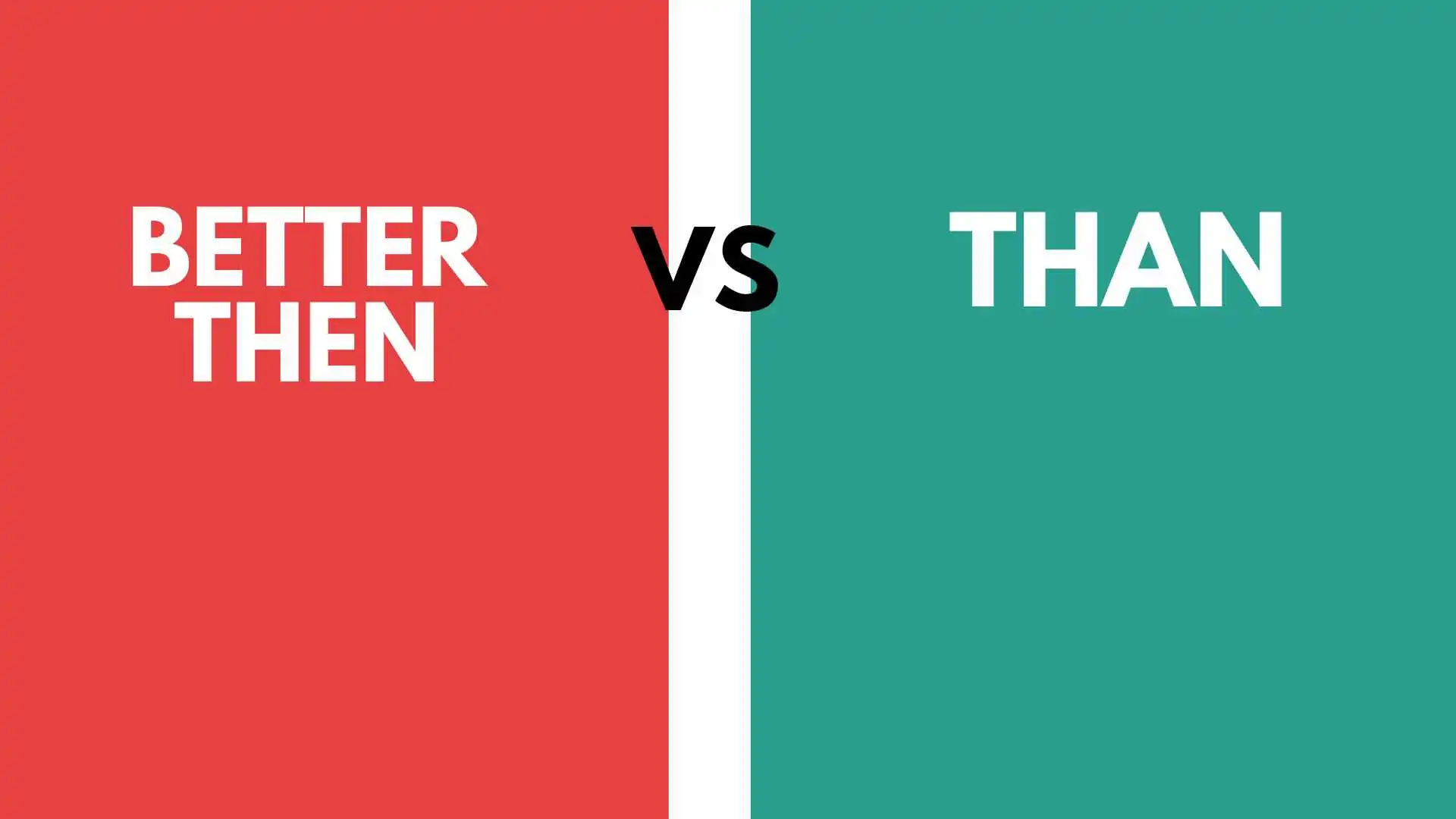
If you’ve ever written a sentence like “I am better then you” and paused for a second wondering if it’s correct, you are not alone.The confusion between Better Then or Than is one of the most common English grammar mistakes made by students, writers, and even native speakers.
In this detailed guide, we will break everything down in a simple, practical, and SEO-friendly way so you never mix these two words again.
By the end, you’ll clearly understand when to use “than” and when “then” is correct and why using the wrong one can completely change your sentence meaning.
⚡ Quick Answer: Better Then or Than?
Here is the simplest way to understand it:
- ✅ Correct: I am better than you.
- ❌ Incorrect: I am better then you.
✔ Final Rule:
- Use THAN for comparison
- Use THEN for time or sequence
👉 So, the correct phrase is always: “Better Than”
Better Then or Than Meaning and Definition
To fully understand Better Then or Than, we first need to break down both words separately.
📌 What Does “Than” Mean?
“Than” is a conjunction used for comparisons.
Example:
- She is smarter than her brother.
- This phone is better than the old one.
👉 It always shows difference between two things.
📌 What Does “Then” Mean?
“Then” refers to time, order, or consequence.
Example:
- I studied hard, and then I slept.
- First we eat, then we leave.
👉 It never shows comparison.
💡 Key Insight:
- Than = Comparison
- Then = Time sequence
Why Better Then or Than Confusion Happens
The confusion between Better Then or Than happens for several reasons:
1. Similar Sound 🎧
Both words sound almost identical when spoken quickly.
2. Fast Typing Errors ⌨️
Many people type quickly and mistakenly write “then” instead of “than.”
3. Lack of Grammar Awareness 📚
Beginners often don’t clearly learn the difference between time words and comparison words.
4. Autocorrect Mistakes 📱
Sometimes phones or keyboards incorrectly replace “than” with “then.”
Grammar Rules for Better Then or Than
Let’s simplify the grammar rules so you can remember them easily.
📌 Rule 1: Use “Than” for Comparisons
Whenever you compare two things, always use than.
Examples:
- Apples are better than oranges.
- He runs faster than me.
- This movie is more interesting than the last one.
📌 Rule 2: Use “Then” for Time or Order
Use then when talking about sequence.
Examples:
- I finished my homework, then I watched TV.
- First step is cooking, then serving.
📌 Rule 3: “Better Than” Is Always Correct
Since “better” is a comparison word, it always pairs with than.
Examples:
- This laptop is better than mine.
- Reading is better than watching TV all day.
Memory Tricks to Remember Better Then or Than
Here are simple tricks to never forget the difference:
🧠 Trick 1: The “A vs T” Rule
- Than = Comparison (A = Against)
- Then = Time (T = Time)
🧠 Trick 2: Think of “Time” in THEN
If the sentence involves time or sequence, use THEN.
🧠 Trick 3: Replace Test
Try replacing the word:
- If “later” fits → use THEN
- If “compared to” fits → use THAN
Example:
- She is smarter ___ him → (compared to → THAN)
Better Then or Than: Side-by-Side Comparison Table
| Feature | Than | Then |
| Usage | Comparison | Time / sequence |
| Function | Shows difference | Shows order |
| Part of speech | Conjunction | Adverb |
| Example | A is better than B | I studied, then slept |
| Keyword relevance | Used in comparisons | Used in storytelling |
Real-Life Examples of Better Then or Than
Let’s see how Better Than is used in daily English.
📌 Education Examples:
- My performance is better than last semester.
- She scored higher than everyone in class.
📌 Daily Life Examples:
- Home-cooked food is better than fast food.
- Walking is better than sitting all day.
📌 Work Examples:
- This strategy is better than the previous one.
- Team A performed better than Team B.
🌍 British vs American English: Better Then or Than
Good news! The rule for Better Then or Than is the same in both British and American English.
✔ No Difference in Usage
- British English: better than
- American English: better than
👉 Both follow the same grammar rule.
📌 Example:
- UK: This solution is better than the old one.
- US: This solution is better than the old one.
✔ No spelling or meaning changes.
Common Mistakes with Better Then or Than
Let’s fix some common errors people make.
❌ Mistake 1:
I am better then you.
✔ Correct:
I am better than you.
❌ Mistake 2:
She is more talented then her friend.
✔ Correct:
She is more talented than her friend.
❌ Mistake 3:
We ate dinner than went home.
✔ Correct:
We ate dinner then went home.
❌ Mistake 4:
Better then nothing.
✔ Correct:
Better than nothing.
Pro Tips to Use Better Than Correctly
Here are expert tips to master Better Then or Than:
✨ Tip 1: Slow Down While Writing
Most mistakes happen due to fast typing.
✨ Tip 2: Focus on Meaning
Ask yourself:
- Am I comparing? → THAN
- Am I showing time? → THEN
✨ Tip 3: Practice with Sentences
Write 5 sentences daily using “better than.”
✨ Tip 4: Read More English Content
Reading improves instinctive grammar accuracy.
Examples: Better Than in Different Contexts
💬 Casual Conversation:
- This pizza is better than yesterday’s.
💼 Professional:
- Our new system is better than the previous version.
🎓 Academic:
- This theory is better than earlier models.
❤️ Emotional:
- Silence is better than unnecessary arguments.
Common Questions People Ask (PAA Style Insight)
Many learners search:
- Is it better then or better than?
- Why do people confuse then and than?
- How to use better than correctly?
👉 The answer is always the same:
Use “than” for comparison, never “then.”
FAQ: Better Then or Than
1. Is it “better then” or “better than”?
It is always better than.
2. Can I use “then” instead of “than”?
No, because “then” refers to time, not comparison.
3. Why do people confuse then and than?
Because they sound similar in spoken English.
4. What is a simple trick to remember?
Use “than” for comparison and “then” for time.
5. Is “better than nothing” correct?
Yes, it is a correct English phrase.
6. Do British and American English differ here?
No, both use “better than” the same way.
7. What is the most common mistake?
Writing “better then” instead of “better than.”
Conclusion: Mastering Better Then or Than Once and for All
Understanding the difference between Better Then or Than is essential for clear and correct English communication. The confusion is common, but the rule is very simple:
- THAN = Comparison
- THEN = Time or sequence