The debate between among and amongst has puzzled English learners and native speakers alike for years. Since both words have nearly the same meaning, it’s easy to wonder if one is more correct than the other.
The truth is that their usage often depends on style, tone, and regional preferences.
In this article, we’ll explore the differences between among and amongst, explain when to use each one, and provide practical examples to make your writing more natural
⚡ Quick Answer: Among vs Amongst
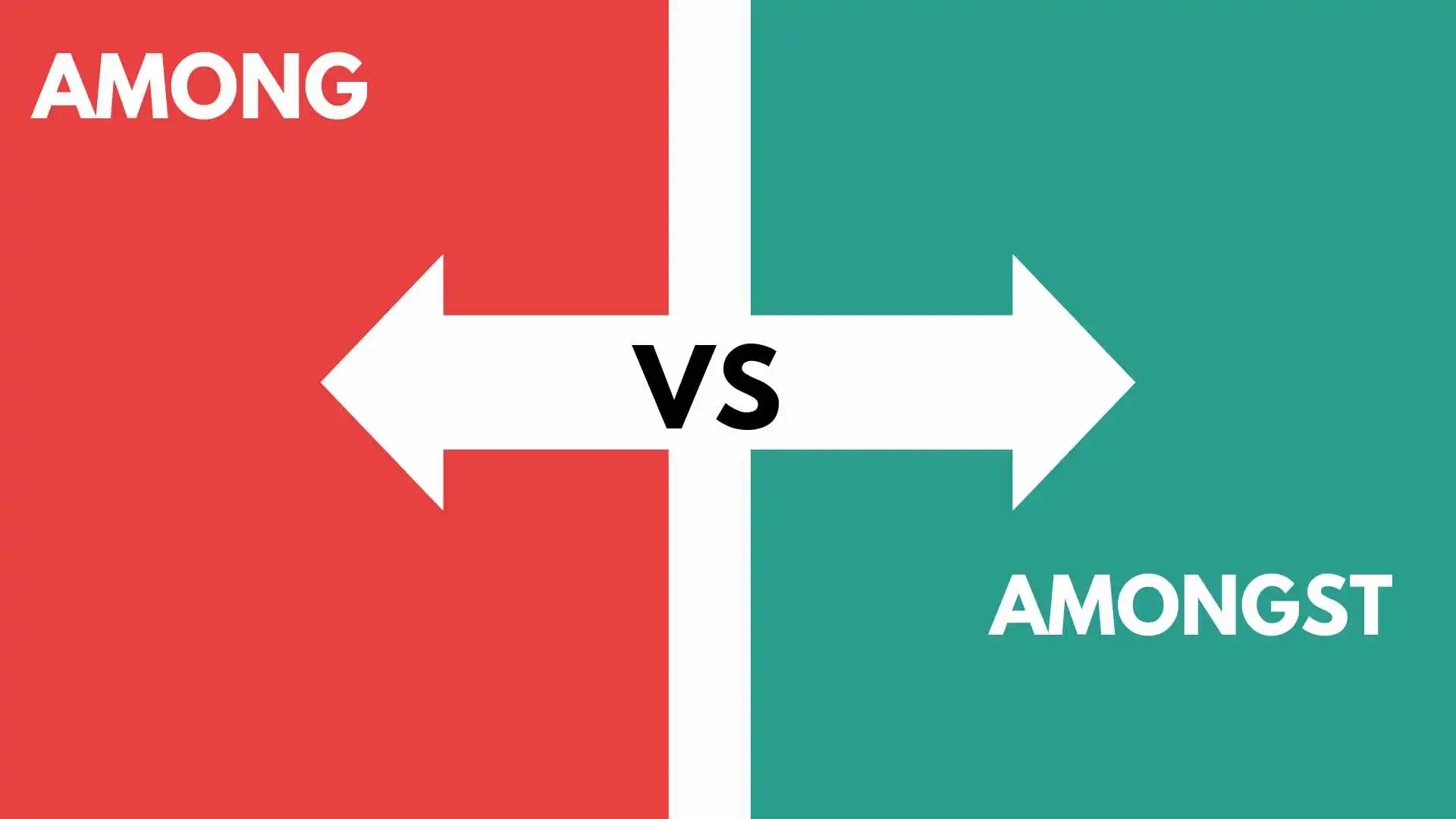
- Among = Standard, modern, and most commonly used
- Amongst = More formal, traditional, or British-style
✅ Both are correct
❌ “Among” is not wrong, and “amongst” is not outdated—just less common
👉 Example:
- ✔ She was sitting among friends
- ✔ She was sitting amongst friends
📖 Meaning and Definition of Among vs Amongst
✅ What Does “Among” Mean?
“Among” means in the middle of or surrounded by multiple people or things.
It is used when referring to a group without specifying individual members.
👉 Examples:
- He felt comfortable among his classmates
- The secret spread among the team
- There was unity among the villagers
✅ What Does “Amongst” Mean?
“Amongst” has exactly the same meaning as “among.” There is no difference in definition.
The only difference is style and tone.
👉 Examples:
- She walked quietly amongst the trees
- The rumor circulated amongst colleagues
🧠 Key Insight:
👉 Meaning = Same
👉 Usage = Different tone (formal vs modern)
🤔 Why Does Confusion Happen?
The confusion between among vs amongst happens for a few simple reasons:
1. They Mean the Same Thing
Both words are interchangeable, which makes people unsure which one is “correct.”
2. “Amongst” Sounds More Formal
Many assume “amongst” is more proper or grammatically correct—but that’s not true.
3. British vs American Influence
Different regions prefer different versions (we’ll explain this in detail later).
4. Extra “-st” Ending Feels Complicated
The extra letters in “amongst” can make it seem more advanced or old-fashioned.
📏 Grammar Rules for Among vs Amongst
Here’s the good news: there are no strict grammar differences between the two.
✔ Both words:
- Are prepositions
- Mean “in the middle of”
- Are used with groups or collections
🔹 Rule 1: Use with Groups (Not Individuals)
👉 Correct:
- She shared the food among her friends
👉 Incorrect:
- She shared the food among Ali and Ahmed ❌
👉 Correct version:
- She shared the food between Ali and Ahmed ✔
🔹 Rule 2: Use for General Distribution
- The prize was divided among the winners
- Responsibility was shared amongst the team
🔹 Rule 3: Avoid Overusing “Amongst”
While correct, “amongst” can feel overly formal or outdated, especially in casual writing.
🧠 Easy Memory Tricks
Want a simple way to remember?
💡 Trick 1: Keep It Short
👉 Among = Modern & Simple
👉 Amongst = Longer & Formal
💡 Trick 2: Think of Everyday Speech
- In daily conversation → use among
- In formal writing or literature → amongst can work
💡 Trick 3: Remove “-st” for Safety
If confused, just drop the “-st” and use among—you’ll almost always be correct.
📊 Among vs Amongst (Side-by-Side Comparison)
| Feature | Among | Amongst |
| Meaning | Same | Same |
| Usage Frequency | Very common | Less common |
| Tone | Neutral, modern | Formal, traditional |
| Region Preference | American English | British English |
| Writing Style | Everyday writing | Literary or formal writing |
| Recommendation | ✔ Preferred | ✔ Optional |
🧾 Real-Life Examples (Different Contexts)
🗣 Everyday Conversation
- I found my phone among the cushions
- She felt relaxed among her family
👉 Rare:
- I found my phone amongst the cushions
✍️ Formal Writing
- The issue was discussed amongst senior officials
- Trust was built amongst the participants
📚 Literature Style
- He wandered amongst ancient ruins
- Silence fell amongst the crowd
💼 Professional Context
- Collaboration among departments is essential
- Ideas were shared among team members
🌍 British vs American English
This is where the difference becomes clearer.
🇺🇸 American English
- Strongly prefers among
- “Amongst” is rarely used
👉 Example:
- Cooperation among nations is important
🇬🇧 British English
- Uses both, but “amongst” is more common than in American English
- Often appears in formal writing
👉 Example:
- Unity amongst citizens is vital
🧠 Summary:
- Among = Universal (safe everywhere)
- Amongst = More British & formal tone
❌ Common Mistakes (Among vs Amongst)
Let’s fix some common errors:
❌ Mistake 1: Using with Two People
- Incorrect: Between the two options, choose among ❌
- Correct: Between the two options ✔
❌ Mistake 2: Thinking “Amongst” is Always Better
- Incorrect: “Amongst” is more correct ❌
- Correct: Both are equally correct ✔
❌ Mistake 3: Overusing “Amongst”
- Incorrect: The gift was shared amongst friends in casual writing ❌
- Better: The gift was shared among friends ✔
❌ Mistake 4: Mixing Formal and Casual Tone
Using “amongst” in informal chats can sound unnatural.
💡 Pro Tips to Master Among vs Amongst
✔ Use “among” in:
- Emails
- Blogs
- Daily conversation
- Exams
✔ Use “amongst” in:
- Formal essays
- Literature
- British-style writing
✔ When in doubt:
👉 Choose among (safe and modern)
✔ Keep tone consistent:
Don’t mix “among” and “amongst” randomly in the same paragraph
✔ Read aloud:
If “amongst” sounds too heavy, switch to “among”
🔍 Deep Usage Insight (Advanced Tip)
Even though both words are interchangeable, “amongst” can subtly slow down the rhythm of a sentence, making it feel more poetic or dramatic.
👉 Example:
- He stood amongst the ruins (dramatic tone)
- He stood among the ruins (neutral tone)
❓ Frequently Asked Questions (FAQs)
1. Is “among” or “amongst” correct?
Both are correct. “Among” is more common, while “amongst” is more formal.
2. Which one should I use in writing?
Use “among” for most situations. Use “amongst” only for formal or stylistic purposes.
3. Is “amongst” outdated?
No, but it is less commonly used in modern English.
4. Can I use them interchangeably?
Yes, they have the same meaning and can be swapped.
5. Which is used in American English?
American English prefers “among.”
6. Which sounds more formal?
“Amongst” sounds more formal and traditional.
7. Is it wrong to avoid “amongst” completely?
Not at all. Many writers only use “among.”
🏁 Conclusion: Among vs Amongst (Final Verdict)
When it comes to among vs amongst, the difference is not about meaning it’s about style and tone.
- Among is the clear winner for everyday use
- Amongst adds a formal or literary touch
👉 If you want to write clearly, naturally, and effectively:
Stick with “among” in most cases.