Have you ever paused while writing and wondered: Is it “sence” or “sense”? You’re not alone. This is one of those small spelling confusions that can quietly slip into your writing and affect clarity, professionalism, and even credibility.
The tricky part? Both words sound exactly the same, which makes it easy to mix them up. But here’s the truth only one of them is actually correct in standard English.
In this complete guide, you’ll learn the real meaning, correct usage, grammar rules, examples, and memory tricks so you never make this mistake again.
⚡ Quick Answer: Sence or Sense
- ✅ Sense = Correct spelling
- ❌ Sence = Incorrect spelling (not a real English word)
👉 Always use “sense” when talking about meaning, feeling, or understanding.
📖 Meaning and Definition of “Sense”
✅ What Does “Sense” Mean?
The word sense is a noun and sometimes a verb. It has several meanings depending on the context:
1. Understanding or Meaning
- The ability to understand something logically
- Example: That explanation makes sense.
2. Physical Perception
- One of the five human senses: sight, smell, taste, touch, hearing
- Example: Dogs have a strong sense of smell.
3. Good Judgment
- Practical wisdom or intelligence
- Example: Use your common sense.
4. Feeling or Awareness
- A general feeling about something
- Example: I had a sense that something was wrong.
❌ What Is “Sence”?
Here’s the simple truth:
👉 “Sence” is NOT a correct English word.
It is just a misspelling of “sense.”
You might see it online or in informal writing, but it’s always considered incorrect in proper grammar.
Sense vs Sence
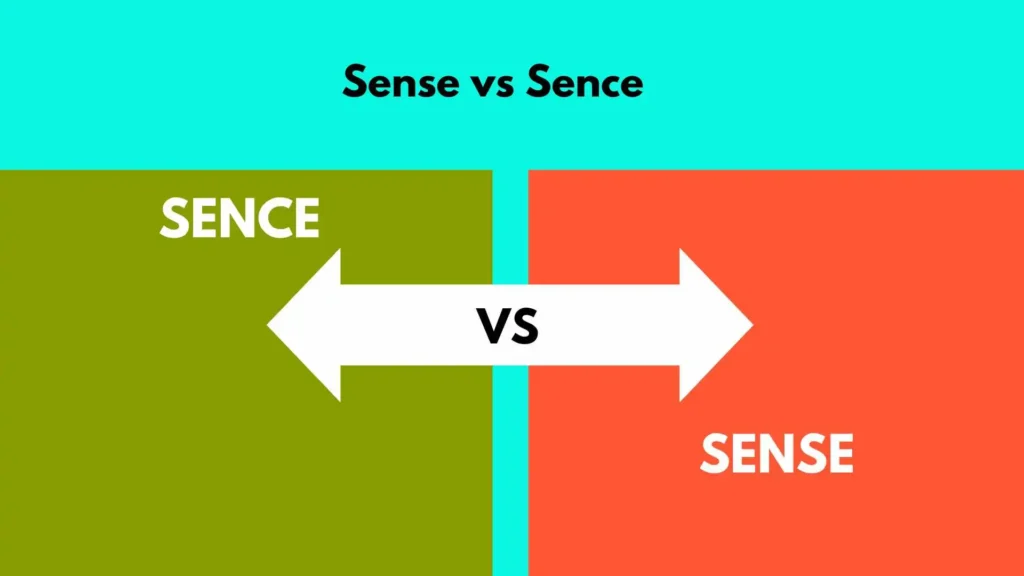
Many people confuse sense and sence because they sound similar. However, sense is the correct English word, while sence is a common spelling mistake.
The word sense refers to understanding, meaning, judgment, or one of the body’s abilities such as sight and hearing. In standard English, you should always use sense instead of sence.
Sence or Sense Meaning
The correct word is sense, which has several meanings depending on the context. It can refer to logical understanding, awareness, or the ability to perceive things through the senses.
For example, “That explanation makes sense” means the explanation is understandable. The spelling sence does not have an accepted meaning in English dictionaries.
Makes Sense or Sence
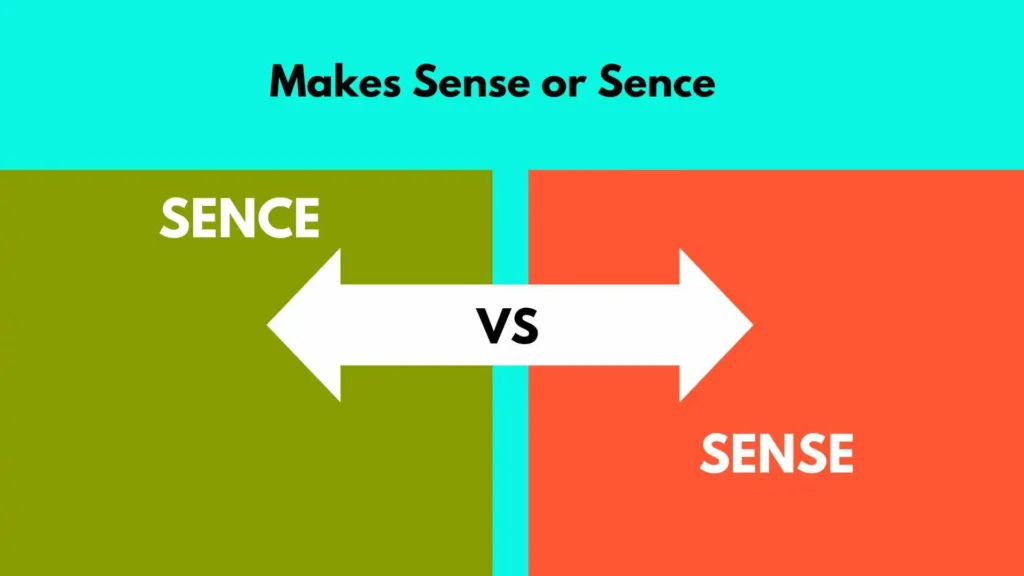
The correct phrase is makes sense. It is commonly used when something is logical, reasonable, or easy to understand.
For example, “Your plan makes sense to me” means the plan seems logical. The phrase makes sence is incorrect because sence is a misspelling of sense.
Sence or Sense in English
In English, sense is the proper spelling and is widely used in both speaking and writing. It can describe understanding, feelings, or physical perception.
The spelling sence is not recognized as a standard English word and should be avoided. Using the correct spelling helps improve clarity and professionalism in writing.
Is Sence a Word?
No, sence is not a standard English word found in major dictionaries. It is usually a spelling error made when people intend to write sense.
The correct word is sense, which can mean meaning, judgment, awareness, or perception. If you are writing in English, always choose sense rather than sence.
🤔 Why Does Confusion Happen?
The confusion between sence or sense happens mainly because of pronunciation.
Common reasons include:
- 🔊 Both words sound identical
- ✍️ English spelling is not always phonetic
- 📱 Typing errors or autocorrect mistakes
- 🧠 Lack of familiarity with correct spelling
👉 Many learners assume “sence” follows patterns like:
- fence
- hence
But English doesn’t follow strict spelling rules everywhere—so memorization helps here.
📚 Grammar Rules for Using “Sense”
To use sense correctly, follow these simple grammar rules:
✔️ Rule 1: Use “Sense” as a Noun
Most commonly used as a noun.
Examples:
- This sentence makes sense.
- She has a good sense of humor.
- I lost my sense of direction.
✔️ Rule 2: Use “Sense” as a Verb (Less Common)
“Sense” can also be used as a verb meaning to feel or detect something.
Examples:
- I sense danger ahead.
- He sensed her hesitation.
✔️ Rule 3: Use in Common Phrases
“Sense” appears in many everyday expressions:
- Common sense
- Make sense
- Sense of humor
- Sense of direction
🧠 Easy Memory Tricks to Remember
Struggling to remember the correct spelling? Try these tricks:
🔑 Trick 1: “Sense has a Sense”
👉 The word sense itself makes “sense”—so it must be correct!
🔑 Trick 2: Think of “Sensitive”
👉 “Sense” is related to sensitive, and both use “se”
🔑 Trick 3: Replace and Check
👉 Replace the word in a sentence:
- If it looks wrong, it probably is!
Example:
- ❌ This makes no sence
- ✅ This makes no sense
📊 Side-by-Side Comparison Table
| Feature | Sense ✅ | Sence ❌ |
| Correct Spelling | Yes | No |
| Meaning | Understanding, feeling | None |
| Usage | Formal & informal writing | Incorrect |
| Dictionary Word | Yes | No |
| Example | That makes sense | ❌ Not valid |
✍️ Examples of “Sense” in Real Life
📌 Everyday Conversation
- That idea makes perfect sense.
- Use your common sense.
Academic Writing
- The theory makes sense in this context.
Professional Communication
- Your proposal makes sense to the team.
📌 Emotional Context
- I had a sense of peace.
🌍 British vs American English
Good news—there’s no difference here!
✅ Both British and American English use:
- Sense ✔️
❌ Neither uses:
- Sence ✖️
👉 So no matter where you are—UK, USA, or anywhere else—the correct spelling is always sense.
⚠️ Common Mistakes (Avoid These!)
Here are mistakes people often make when confusing sence or sense:
❌ Incorrect Usage:
- This makes no sence
- I have a sence of humor
- It doesn’t sence right
✅ Correct Usage:
- This makes no sense
- I have a sense of humor
- It doesn’t sense right
💡 Pro Tips to Avoid Mistakes
Want to master this once and for all? Follow these tips:
✔️ 1. Always Double-Check
Even experienced writers make typos—proofread your work.
✔️ 2. Use Spell Check Tools
Tools like Grammarly or built-in spell check can catch “sence.”
✔️ 3. Read More English Content
Exposure improves natural spelling memory.
✔️ 4. Practice Writing
Use “sense” in your daily sentences.
✔️ 5. Learn Word Families
Sense → Sensitive → Sensible → Sensation
🔍 Deep Understanding: Different Uses of “Sense”
Let’s explore deeper meanings for better clarity:
🧩 Logical Sense
- Your argument makes sense.
👃 Sensory Sense
- Sense of smell
💭 Emotional Sense
- A sense of belonging
🧠 Intellectual Sense
- He has a strong sense of reasoning.
❓ Frequently Asked Questions (FAQs)
1. Is “sence” ever correct?
❌ No, “sence” is always incorrect.
2. Why do people write “sence” instead of “sense”?
Because both sound the same, leading to spelling confusion.
3. How do I remember the correct spelling?
Think: “Sense makes sense.”
4. Is “sense” a noun or a verb?
✅ Both! Mostly a noun, but can also be a verb.
5. Does British English use “sence”?
❌ No, only “sense” is correct worldwide.
6. What is an example of “sense” in a sentence?
👉 That explanation makes sense.
7. What are synonyms of “sense”?
- Meaning
- Understanding
- Awareness
- Feeling
🏁 Conclusion: Sence or Sense – Final Verdict
Let’s wrap it up clearly:
👉 “Sense” is the correct spelling
👉 “Sence” is always incorrect
The confusion is understandable due to pronunciation, but now you know the rules, meanings, and correct usage. By practicing and applying simple memory tricks, you can easily avoid this common mistake.
Using the right word not only improves your writing but also boosts your confidence and credibility.
Red More Articlas
Per Se or Per Say: Meaning, Difference, and Correct Usage Explained (2026 Guide)
Tweak or Tweek: Meaning, Difference, and Correct Usage Explained (2026 Guide)
Goodmorning or Good Morning: Which One Is Correct?
Colombian vs Columbian: Meaning, Usage & Examples Made Easy 2026