If you’ve ever paused while typing “girlie or girly”, you’re not alone. These two spellings look almost identical, sound the same, and are often used interchangeably but are they actually the same? Or is one more correct than the other?
This guide will break it all down in a simple, engaging way so you can confidently use the right word every time. Whether you’re writing casually, posting on social media, understanding “girlie or girly” can make your writing clearer and more polished.
⚡ Quick Answer: Girlie or Girly?
- “Girly” is the standard and correct spelling in most contexts.
- “Girlie” is an informal or stylistic variation.
- Both mean the same thing: something that is feminine, cute, or associated with girls.
- For formal writing, SEO, or professional use → Use “girly”.
- For casual, playful, or aesthetic tone → “girlie” works too.
What Does “Girlie or Girly” Mean?
At its core, both girlie and girly describe something that reflects feminine traits, style, or behavior.
Common meanings include:
- Soft, cute, or feminine appearance
- Interests traditionally associated with girls
- A playful or youthful vibe
Examples:
- “She loves wearing girly dresses.”
- “This room has a girlie aesthetic.”
Even though the meaning stays the same, the tone and usage differ slightly, which is where things get interesting.
Girlie or Girly Meaning
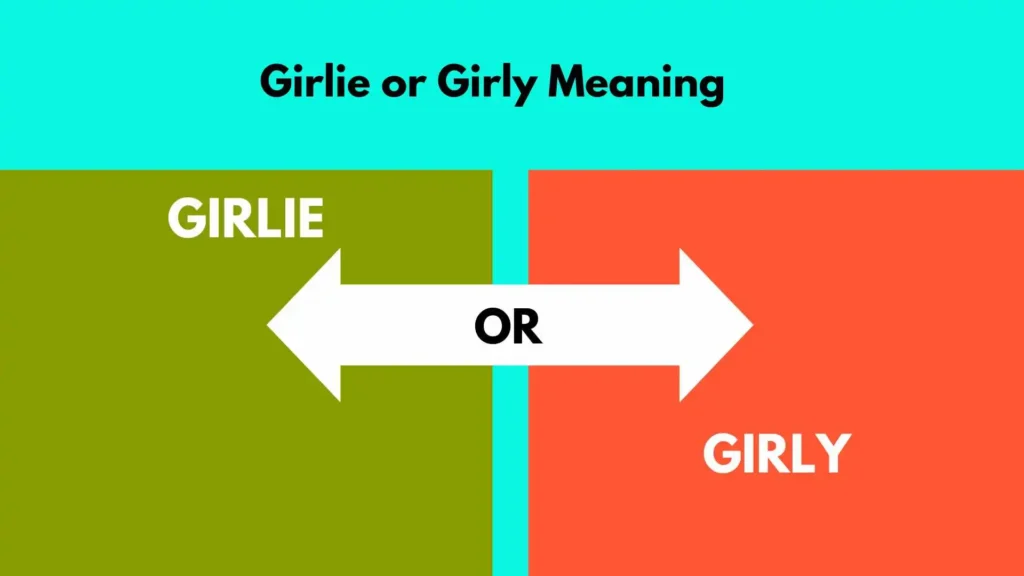
The words girlie and girly are often used to describe someone or something that is feminine. Girly is an adjective used for feminine styles, interests, or behavior, while girlie is usually a friendly nickname for a girl or female friend.
Both terms are commonly used in casual conversations and on social media. Their meaning depends on the context in which they are used.
Girlie Synonym
Several words can be used as synonyms for girlie, depending on the situation. Common alternatives include girl, girlfriend, bestie, sis, lady, and gal.
These words are often used in a friendly and affectionate way when talking to female friends. The best synonym depends on the tone and relationship between the people involved.
Hey Girlie
Hey girlie is a casual and friendly greeting that people use when talking to a female friend. It is especially popular on social media platforms like TikTok, Instagram, and Snapchat.
The phrase sounds warm, cheerful, and affectionate. Many people use it to start a conversation in a fun and relaxed manner.
Thanks Girly or Girlie
Both “Thanks girly” and “Thanks girlie” are informal ways to thank a female friend. These expressions add a friendly and personal touch to a simple “thank you.” They are commonly used in text messages, comments, and social media chats.
The choice between girly and girlie usually comes down to personal preference, as both are widely understood.
Girly: The Standard and Widely Accepted Form
Why “Girly” Is Preferred
“Girly” is the dictionary-recognized spelling and is used in:
- Formal writing
- Articles and blogs
- Academic contexts
- SEO-optimized content
Characteristics of “Girly”:
- Neutral and widely accepted
- Works in all contexts
- Professional and clear
Examples:
- “She has a girly sense of fashion.”
- “The decor is bright and girly.”
👉 If you’re unsure which one to use, “girly” is always the safe choice.
Girlie: A Cute and Trendy Variation
“Girlie” is more of a modern, informal, or stylistic spelling. You’ll often see it in:
- Social media captions
- Aesthetic blogs
- Branding or usernames
- Casual conversations
Why People Use “Girlie”:
- Looks more playful and cute
- Adds personality and softness
- Feels more expressive
Examples:
- “Just a cozy girlie day 💕”
- “Living my best girlie life!”
👉 It’s not wrong—it’s just less formal and more stylistic.
Girlie vs Girly: Key Differences
| Feature | Girly | Girlie |
| Correctness | Standard spelling ✅ | Informal variation ⚠️ |
| Tone | Neutral / Professional | Cute / Playful |
| Usage | Formal & informal | Mostly informal |
| SEO Value | Higher | Lower (less searched) |
| Popularity | More common | Trend-based usage |
When Should You Use “Girly”?
Use “girly” when:
- Writing blogs or articles
- Doing SEO or keyword optimization
- Creating professional content
- You want clarity and correctness
Example:
“This guide explores girly fashion trends for 2026.”
When Should You Use “Girlie”?
Use “girlie” when:
- Posting on Instagram, TikTok, or Pinterest
- Writing captions or aesthetic content
- Creating a fun, youthful tone
- Branding for a feminine audience
Example:
“Self-care Sunday for every girlie out there 💖”
Is “Girlie” Grammatically Correct?
Yes—but with a catch.
- It’s not the standard spelling, but it is widely understood.
- It’s acceptable in informal contexts.
- Not recommended for academic or professional writing.
👉 Think of “girlie” like slang—it works, but not everywhere.
🌍 British vs American English Clarification
When it comes to “girlie or girly”, there is no major difference between British and American English.
Both versions prefer:
- “Girly” as the standard spelling
“Girlie” in both regions:
- Considered informal or stylistic
- Used more in casual or creative contexts
Examples:
American English:
- “She has a very girly style.”
British English:
- “That dress looks quite girly.”
👉 In both cases, “girly” remains the correct and preferred choice.
Popular Phrases Using Girly or Girlie
With “Girly”:
- Girly outfits
- Girly aesthetic
- Girly room decor
- Girly things to do
- Girly fashion ideas
With “Girlie”:
- That girlie vibe
- Girlie lifestyle
- Soft girlie aesthetic
- Girlie moments
Common Mistakes to Avoid
❌ Using “girlie” in formal writing
👉 Always use girly instead
❌ Assuming they have different meanings
👉 They mean the same—only tone differs
Real-Life Usage Examples
Formal Context:
“The brand focuses on girly fashion trends for young women.”
Casual Context:
“All my fellow girlies, you need to try this!”
Mixed Usage:
“This collection blends girly elegance with a playful girlie vibe.”
Why This Confusion Exists
The confusion between girlie or girly comes from:
- Similar pronunciation
- Social media trends
- Creative spelling styles
- Informal digital communication
Language evolves—and “girlie” is a result of that evolution.
FAQs About Girlie or Girly
1. Is “girlie” a real word?
Yes, but it’s informal and not widely used in formal writing.
2. Which is correct: girlie or girly?
“Girly” is the correct and standard spelling.
3. Can I use “girlie” in blogs?
Yes, but only in casual tone sections not for SEO keywords.
4. Is “girlie” slang?
Not exactly slang, but it’s considered informal and trendy.
Conclusion: Girlie or Girly Final Verdict
So, when it comes to “girlie or girly”, the answer is clear:
- “Girly” is the correct .
- “Girlie” is a fun, informal variation used for style and personality
Read MORE Articlas
Rhythm or Rythm: Meaning, Difference, and Correct Usage Explained (2026 Guide)
Deep Seeded or Seated: Meaning, Difference, and Correct Usage Explained (2026 Guide)
In Effect vs In Affect: Meaning, Difference, and Correct Usage Explained (2026 Guide)
Kill or Be Killed: Meaning, Usage, and Real-Life Understanding (2026 Guide)